
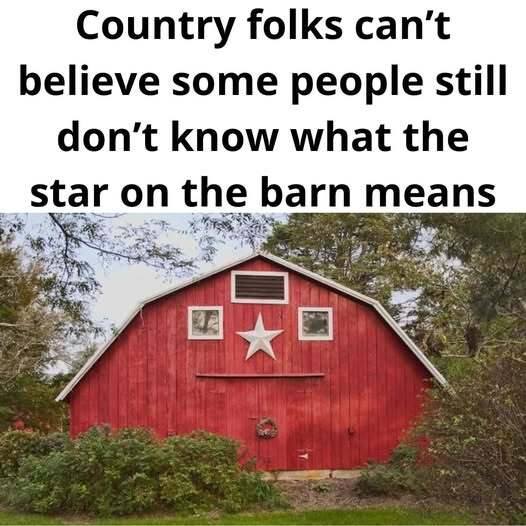
Barn stars are a familiar sight in many rural landscapes, often mounted above doors or centered on wide wooden walls. While they’re commonly seen today as charming farmhouse décor, their origins are rooted in tradition and cultural identity. These stars—usually made of painted wood or weathered metal—have long served as quiet symbols of heritage, especially within early farming communities in the United States.
The custom is closely linked to German immigrants who settled in Pennsylvania during the 18th century. As these families established farms and built homes, barn stars became a visual expression of belonging and continuity. For many, the symbol offered reassurance—a hopeful sign meant to bring good fortune and a sense of protection over the land, animals, and people who depended on it. Even without strong belief in superstition, the star represented optimism and care for one’s livelihood.
Beyond symbolism, barn stars reflected pride and craftsmanship. Placing one on a barn wasn’t random; it showed attention to detail and respect for the work done there. In some regions, stars appeared alongside other folk-inspired designs like quilt patterns or geometric motifs, each color and shape chosen to reflect ideas such as unity, balance, or family values. Together, these designs turned functional buildings into personal statements.
Today, barn stars are embraced mainly for their classic appeal rather than their original meanings. They appear on homes, sheds, and even interior walls, offering a nod to agricultural roots and old-world artistry. Whether admired as a piece of history, a decorative accent, or a symbol of good luck, barn stars continue to bridge the past and present—reminding us how simple designs can carry stories across generations.