
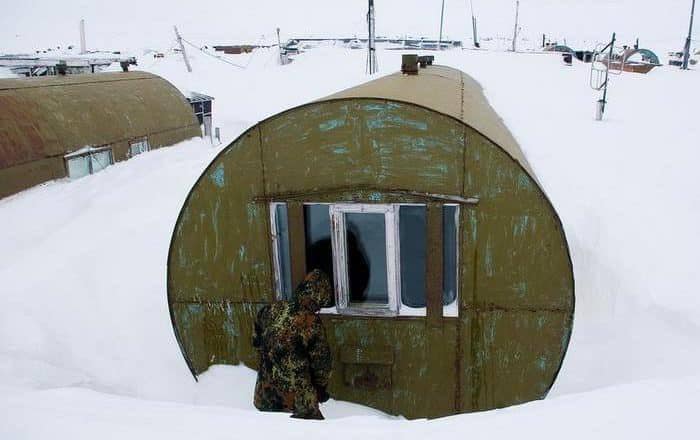
Life in northern Russia has always demanded creativity, and housing is no exception. In some parts of the North, the Ural region, and the Far East of Russia, people have turned old metal shipping containers into compact homes. Originally designed to transport goods by sea, these barrel-shaped structures now serve as unconventional tiny houses—proof that survival in extreme climates often inspires unconventional solutions.
The practice began with rotational shift workers who needed quick, durable shelter in remote areas with brutal winters. Using whatever materials were available, they converted metal containers into temporary living quarters. When those workers eventually moved on, locals facing housing shortages took over the structures. What started as a stopgap solution slowly became a semi-permanent form of housing for people with limited options.
From the outside, these barrel homes look harsh and uninviting—rusted metal shells battered by wind and snow. Step inside, however, and the story often changes. Many residents have invested time and ingenuity into making the spaces livable, adding insulation, double-pane windows, heated floors, and compact kitchens. The rounded walls limit layout options, usually resulting in a narrow living area with two small connected rooms, but thoughtful design helps make the most of every inch.
The greatest challenge remains heat. Keeping a metal, cylindrical structure warm through long winters is no small task. Yet some residents have mastered it, managing to stay comfortable even in extreme cold. Their homes may be tiny and unconventional, but they represent resilience, adaptability, and the human ability to turn unlikely materials into functional living spaces—no matter how unforgiving the environment.