
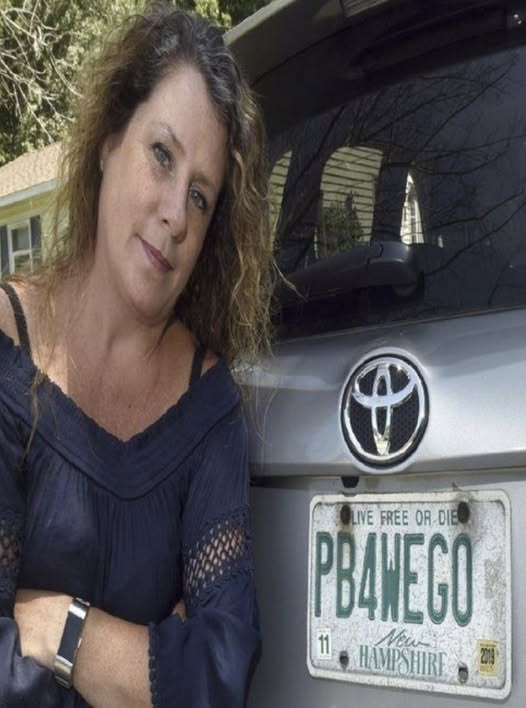
For more than fifteen years, Wendy Auger never imagined her personalized license plate would become a topic of statewide discussion. The plate, reading “PB4WEGO,” was a familiar, playful phrase to anyone who has traveled with kids—short for a common pre-trip reminder. Over the years, it sparked smiles, laughter, and knowing nods from other drivers, quietly becoming part of her family’s everyday identity.
That sense of familiarity was shaken when the New Hampshire Department of Motor Vehicles unexpectedly informed her the plate no longer met state guidelines. After more than a decade of approval, the sudden reversal felt confusing and disheartening. From Auger’s perspective, the message was never intended to offend or provoke—it was simply light humor rooted in ordinary family life. The decision raised an immediate question: how could something once deemed acceptable suddenly be considered a violation?
As word spread, the situation sparked broader conversation. Many community members expressed support, saying the phrase was widely understood as harmless and playful rather than inappropriate. Others pointed to the importance of consistency in how standards are applied, arguing that long-approved plates shouldn’t be reevaluated without clear explanation. The debate highlighted how interpretation can shift over time, even when intent remains unchanged.
Ultimately, the decision rested with state officials, but Auger’s experience resonated far beyond one vehicle. It became a reminder that personal expression—no matter how small—can carry meaning and spark dialogue. In navigating situations like this, clarity, fairness, and context matter. Sometimes, even a license plate can reveal how shared language, humor, and regulation intersect in unexpected ways.