
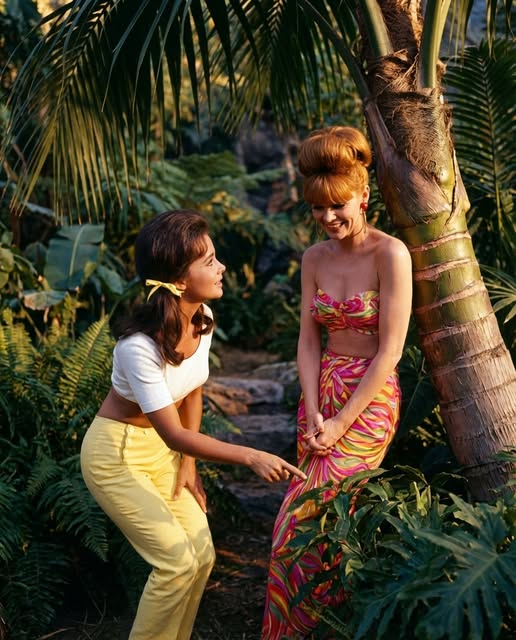
More than half a century after it first aired, Gilligan’s Island continues to feel surprisingly fresh. The sitcom’s original run was brief—just three seasons in the mid-1960s—but constant reruns transformed it into a shared cultural memory. What keeps audiences coming back isn’t just the sunny humor or the instantly recognizable characters; it’s the way the show invites viewers to look a little closer. Over time, fans discovered that its imperfections and production secrets only made it more enjoyable, turning casual watching into a kind of playful scavenger hunt.
One of the most talked-about curiosities appears right at the beginning. In early opening credits, sharp-eyed viewers noticed that the S.S. Minnow occasionally seemed to carry more than the famous seven castaways, thanks to stand-ins used during wide shots. Similar quirks pop up throughout the series—background details that don’t quite fit the idea of total isolation. Because many scenes were filmed on studio lagoons near Los Angeles, the illusion of a deserted island relied heavily on camera angles. When that illusion slipped, fans embraced it as part of the fun rather than a flaw.
The show also offers subtle snapshots of real history. Its pilot episode was filmed in Honolulu Harbor in November 1963, shortly after the assassination of President John F. Kennedy. As a result, American flags flying at half-staff are visible in the opening footage, quietly anchoring the comedy in a somber moment of national life. Creator Sherwood Schwartz layered in cultural nods as well, most famously naming the S.S. Minnow after Newton Minow, a television critic—an inside joke that added a wink of satire beneath the surface comedy.
Off camera, the spirit of collaboration helped shape the series’ lasting appeal. Cast members were known for supporting one another, whether campaigning for fair credit or bringing extra enthusiasm to their roles. On screen, small inconsistencies—wardrobe changes, shifting character habits, or playful exaggerations—became part of the show’s identity. Today, with only one cast member still living, Gilligan’s Island endures as proof that warmth, creativity, and even visible imperfections can come together to create something timeless and deeply comforting for generations of viewers.