
My father didn’t argue. He nodded politely, listening without protest.
But in his quiet moments, his mind was sharp. He thought about the years in that house—every nail he’d driven, every flower he’d planted with my mother. He recalled building the front porch himself and repainting the living room twice to get her perfect shade.
He looked at David and Susan, lounging on his couch, eating his food, plotting to push him out. And he wondered—not with anger, but with clarity—how people who offered to help could be so callous.
He didn’t shout or fight. Instead, he formed a quiet plan. Something simple. Something clever.
He waited, observed, and let them grow complacent in their assumptions.
Three days before we were set to return, he said something that caught them off guard.
“You’re right,” he said calmly. “Maybe it’s time I moved out. Could you help me pack?”
Susan’s face lit up. “Of course! We’ll get everything boxed up. You just relax.”
David nodded. “We’ll make this place sparkle again.”
Susan leaned in, smug. “Can you believe it? He’s actually doing it.”
David chuckled. “Told you he’d cave. Old folks avoid conflict.”
Susan glanced around the living room. “I’m thinking new curtains—maybe soft greens to brighten the place.”
David smirked. “And that study? Perfect for a home theater. Big screen, recliners, the works.”
Susan grinned. “This will finally feel like a real home, not some dusty relic.”
They clinked coffee mugs in celebration, unaware they were toasting their own misstep.
For two days, they packed my father’s belongings—clothes, books, framed photos—all neatly stacked in the garage. They giggled like kids, even pulling out a measuring tape to size up the rooms.
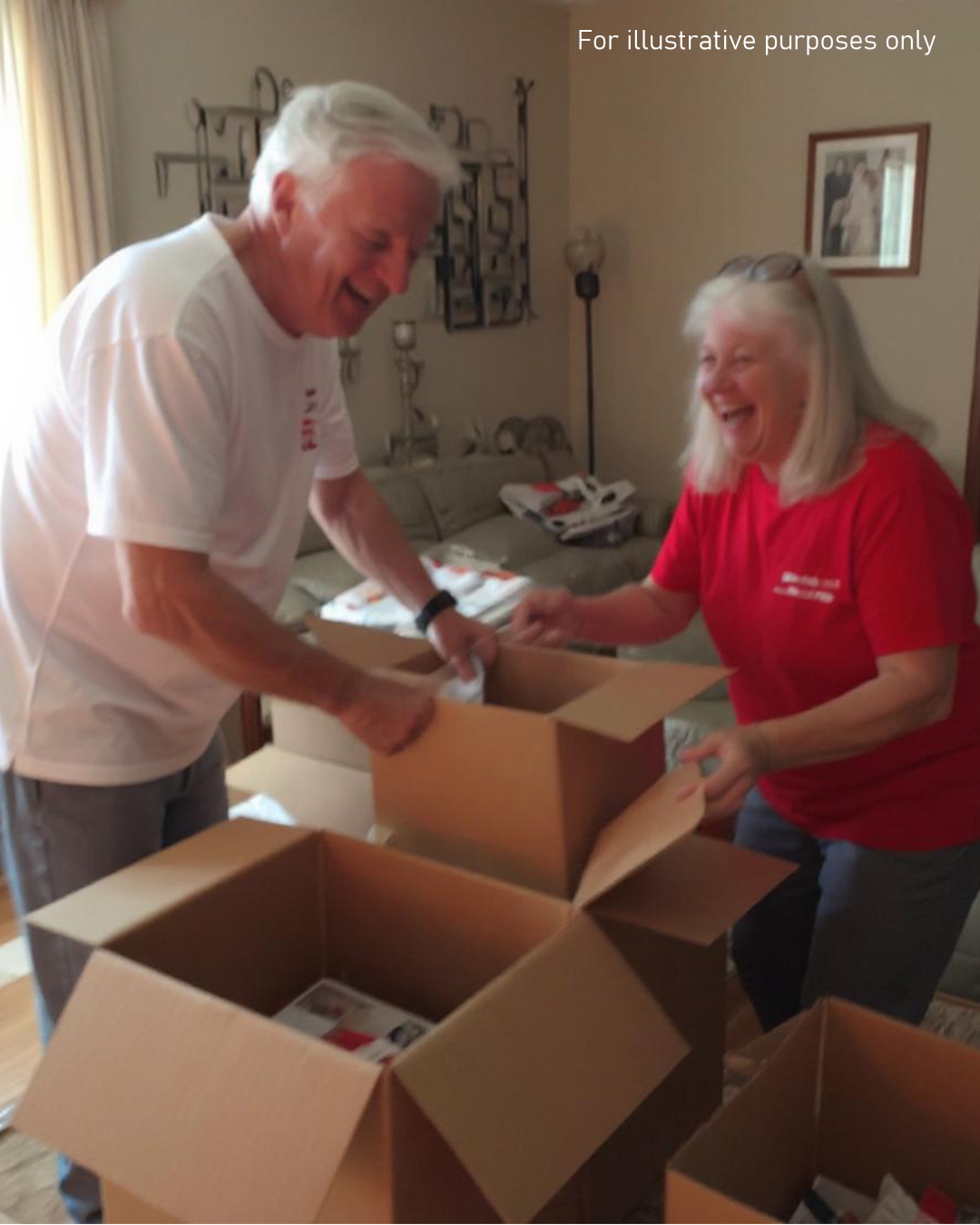
Then my father said, almost offhandedly, “While you’re at it, could you pack some of your things? I’m thinking of redoing your room.”
Susan chirped, “Sure! We’ll move our stuff to storage. Easy.”
David agreed. “Yeah, let’s get this done.”
As they taped boxes and labeled shelves, my father stood back and watched. He saw David measuring the hallway like it was already his. He noticed Susan humming as she folded his sweaters and stacked his books like they were trash.
Inside, my father felt no rage—just calm. He saw how quickly they’d revealed their true colors, how easily they forgot they were guests. But most of all, he felt certain. Certain they needed a lesson. And they would learn it soon.
Two mornings later, the doorbell rang. A moving truck idled outside. Two uniformed men stepped forward.

David answered the door, looking puzzled. His expression shifted to alarm as he stared at the men in matching jackets.
One said, “Pickup for David and Susan. Maple Grove Assisted Living. Two residents. Boxes already logged.”
David’s eyes widened. “What? That’s not us! We didn’t sign up for anything!”
The mover stayed calm. “Request came from this address. Paperwork’s in order. You’re booked for a shared suite. Nice place, great amenities.”
They turned to my father, faces flushed with shock.
Susan waved her hands. “This is a mistake! We’re not going anywhere.”
David snatched the clipboard. “This is absurd! Who authorized this? Show me the paperwork!”
The mover pointed. “Everything checks out. Request from this address. You’re both listed. Suite 306.”
Susan glanced at the garage, horrified. “Those boxes—are those ours? Did you pack our things?”
David fumbled. “Where are the keys? Where’s our car? We didn’t agree to this!”
The movers stood firm. “Transport’s included. You’re set for arrival by noon.”
My father stepped into the hallway, hands in his pockets, watching the chaos with quiet ease.
Susan gasped, “You set us up!”
He smiled. “I thought you’d like your own place. As for me, I’m downsizing—a cozy condo. Better for my knees. This house? I’m selling it.”
David shouted, “You can’t do that!”
My father replied evenly, “Pretty sure I can. It’s mine.”
Then he stepped closer, his voice steady but firm. “And I have to say—I’m disappointed. Deeply.”
David scoffed. “Disappointed? In what?”
“In both of you,” my father said. “You came here pretending to help. Instead, you insulted me in my own home, tried to push me out like I was a burden.”
Susan crossed her arms. “We were just being practical.”
“No,” my father said, shaking his head. “You were selfish. And cruel. This house was never yours to claim. But you treated it—and me—like we were in your way.”
They stood silent, stunned, as the movers waited by the door. Then they stormed out, humiliated.
Since then, they’ve been sulking, calling him petty and cold.
But Michael didn’t let it go.
He told them bluntly, “You embarrassed yourselves. That was my father-in-law, not some stranger. You had one job, and you turned it into a power grab.”
Susan tried to argue. “We were just helping him adjust.”
Michael shook his head. “No, you tried to force him out. You insulted him, made him feel like he didn’t belong in his own home. That’s not help. That’s control.”
His words hit hard, and they had no response.
Then he added firmly, “You owe him a real apology.”
They didn’t reply immediately. For days, they stayed silent. Then, finally, they called my father. Susan spoke first, her tone stiff. “We’re sorry for how things went. It wasn’t right.”
David mumbled something barely resembling an apology. My father thanked them but said little else.
He had already moved on.